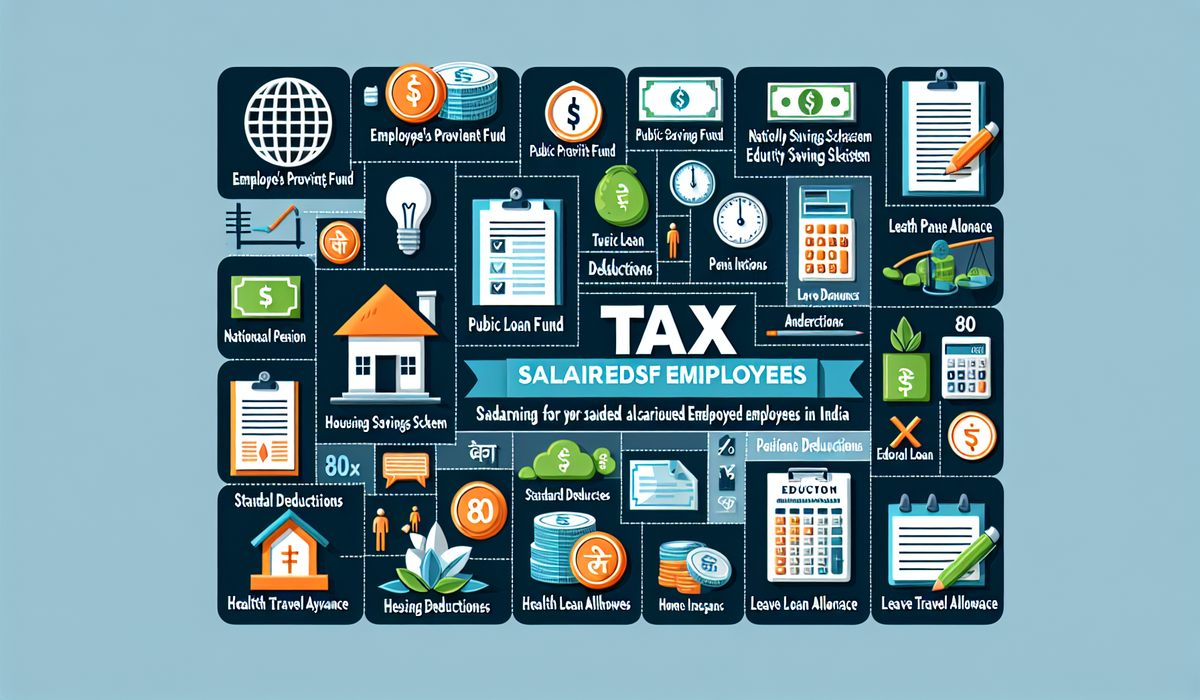
hi friends, Effective tax planning is essential for salaried employees in India to optimize their income and achieve financial goals. By strategically utilizing various deductions and exemptions available under the Income Tax Act, individuals can significantly reduce their tax liabilities. This article provides comprehensive tax planning tips tailored for salaried employees in India.
Tax Planning Tips for Salaried Employees in India
1. Maximize Deductions Under Section 80C
Section 80C of the Income Tax Act allows deductions up to ₹1.5 lakh on specific investments and expenses. Utilizing this section effectively can substantially lower taxable income. Eligible investments include:
– Employee Provident Fund (EPF): A mandatory contribution where both employer and employee contribute 12% of the basic salary.
– Public Provident Fund (PPF): A government-backed savings scheme with a 15-year tenure, offering tax-free returns.
– Equity-Linked Savings Scheme (ELSS): Mutual funds that invest predominantly in equities, offering potential for higher returns with a lock-in period of three years.
– National Savings Certificate (NSC): A fixed-income investment with a five-year lock-in period, suitable for conservative investors seeking assured returns.
– Life Insurance Premiums: Premiums paid for life insurance policies for self, spouse, or children are eligible for deductions.
2. Leverage Health Insurance Deductions Under Section 80D
Premiums paid for health insurance policies qualify for deductions under Section 80D:
– Self and Family: Up to ₹25,000 for individuals below 60 years.
– Senior Citizens: Up to ₹50,000 if the insured is 60 years or older.
An additional deduction of ₹5,000 is available for preventive health check-ups within the overall limit.
3. Utilize House Rent Allowance (HRA) Exemption
If residing in rented accommodation, employees can claim HRA exemption under Section 10(13A). The exempt amount is the least of:
– Actual HRA received.
– 50% of salary (40% for non-metro cities).
– Rent paid minus 10% of salary.
Maintaining rent receipts and rental agreements is essential for claiming this exemption.
4. Claim Deductions on Home Loan Interest and Principal
Home loan borrowers can avail deductions under:
– Section 80C: Up to ₹1.5 lakh on principal repayment.
– Section 24(b): Up to ₹2 lakh on interest paid for self-occupied property.
First-time homebuyers may also claim an additional deduction under Section 80EE.
5. Invest in the National Pension System (NPS)
NPS offers an additional deduction of up to ₹50,000 under Section 80CCD(1B), over and above the ₹1.5 lakh limit of Section 80C. This scheme aids in building a retirement corpus with tax benefits.
6. Utilize Standard Deduction
Salaried individuals are entitled to a standard deduction of ₹50,000, reducing taxable income without the need for specific investments or expenses.
7. Claim Leave Travel Allowance (LTA)
LTA covers expenses for domestic travel undertaken with family and can be claimed twice in a block of four years. Maintaining travel bills and applying through the employer is necessary to avail this benefit.
8. Deduct Education Loan Interest Under Section 80E
Interest paid on education loans for higher studies is eligible for deduction under Section 80E, with no upper limit, for up to eight years.
9. Explore Additional Tax-Saving Instruments
Other avenues include:
– Tax-Saving Fixed Deposits: Five-year FDs offering deductions under Section 80C.
– Sukanya Samriddhi Yojana (SSY): A scheme for the girl child with tax-free returns.
– National Savings Certificate (NSC): A fixed-income investment with a five-year lock-in period.
10. Plan Investments Early
Avoid last-minute tax planning to ensure investments align with financial goals and to prevent hasty decisions that may not yield optimal returns.
By strategically utilizing these tax-saving options, salaried employees in India can effectively reduce their tax liabilities while working towards their financial objectives.