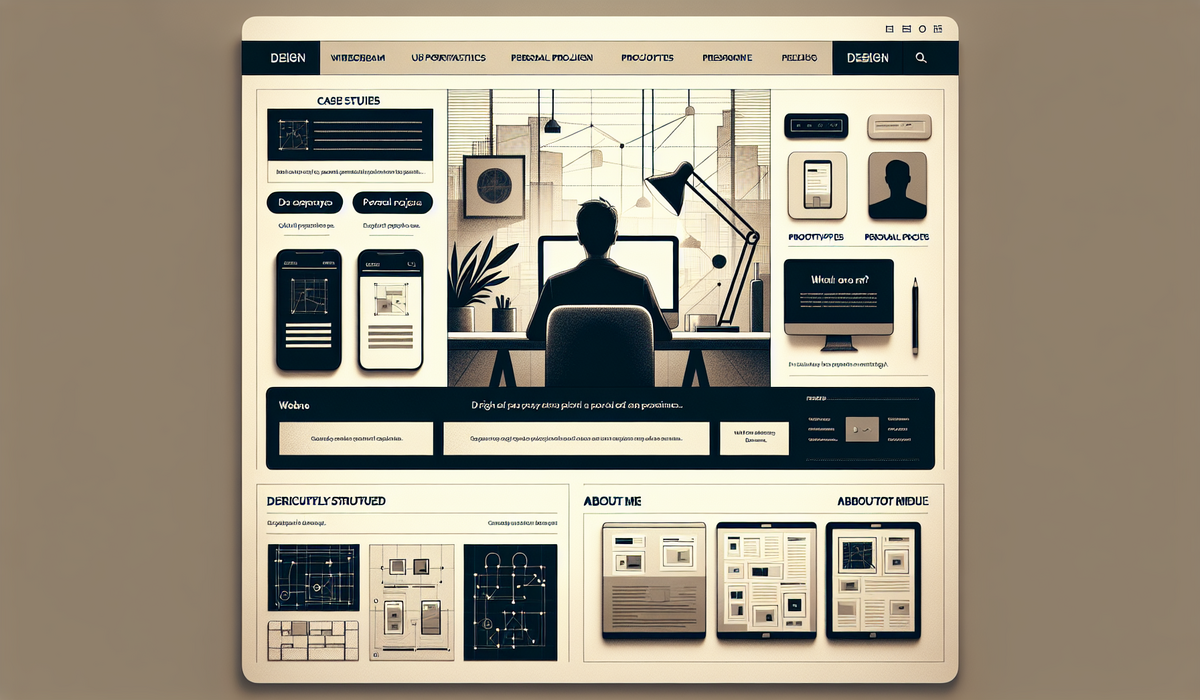
Hi friends, crafting a compelling portfolio is essential for securing positions in UX, UI, and web development. A well-structured portfolio not only showcases your skills but also demonstrates your problem-solving abilities and design thinking process. This guide provides a step-by-step approach to building a portfolio that stands out to potential employers.
How to Build a Portfolio for UX/UI/Web Development Jobs
1. Define Your Portfolio’s Objective
Begin by clarifying the purpose of your portfolio. Are you targeting full-time roles, freelance projects, or internships? Understanding your goal will help tailor your portfolio to the specific audience you aim to impress.
2. Curate Your Best Work
Quality trumps quantity. Select 3-5 projects that best represent your skills and align with the roles you’re seeking. Each project should highlight different aspects of your expertise, such as user research, wireframing, prototyping, and visual design.
3. Develop Detailed Case Studies
For each selected project, create a comprehensive case study that includes:
– Problem Statement: Clearly define the challenge or need addressed.
– Your Role: Specify your responsibilities and contributions.
– Process: Outline the steps taken, including research, design iterations, and testing.
– Tools Used: List the software and methodologies employed.
– Outcome: Present the final product and its impact, supported by metrics or user feedback when possible.
This narrative approach demonstrates your problem-solving skills and design thinking process.
4. Showcase a Diverse Skill Set
Highlight various competencies to exhibit your versatility:
– Wireframing and Prototyping: Use tools like Figma or Sketch to create interactive prototypes.
– User Research: Demonstrate your ability to conduct interviews, surveys, and usability tests.
– UI Design: Showcase your proficiency in creating intuitive and aesthetically pleasing interfaces.
– Information Architecture: Illustrate how you organize content for optimal user experience.
– Interaction Design: Present examples of animations and interactive elements that enhance usability.
This breadth of skills makes you a more attractive candidate to potential employers.
5. Personalize Your Portfolio
Infuse your personality into your portfolio to make it memorable:
– About Me Section: Share your background, design philosophy, and what drives your passion for UX/UI design.
– Personal Projects: Include passion projects or redesigns that reflect your interests and creativity.
This personal touch helps potential employers connect with you beyond your technical skills.
6. Ensure User-Friendly Design
Your portfolio itself should exemplify excellent UX/UI principles:
– Logical Structure: Organize content in a clear, intuitive manner.
– Simplicity: Avoid unnecessary graphics or animations that may distract from your work.
– Responsiveness: Ensure your portfolio is accessible and functional across various devices and screen sizes.
A well-designed portfolio reflects your attention to detail and understanding of user experience.
7. Optimize for Search Engines
Enhance your portfolio’s visibility by incorporating relevant keywords throughout your content. Use descriptive titles and meta descriptions, and ensure your site is indexed by search engines. This optimization increases the chances of your portfolio being discovered by recruiters and hiring managers.
8. Seek Feedback and Iterate
Before finalizing your portfolio, gather feedback from peers, mentors, or industry professionals. Use their insights to refine your content, design, and overall presentation. Continuous improvement demonstrates your commitment to excellence and adaptability.
By following these steps, you can create a compelling and effective portfolio that showcases your skills, experience, and unique perspective, positioning you as a strong candidate in the competitive fields of UX, UI, and web development.